01
Community and first-response readiness
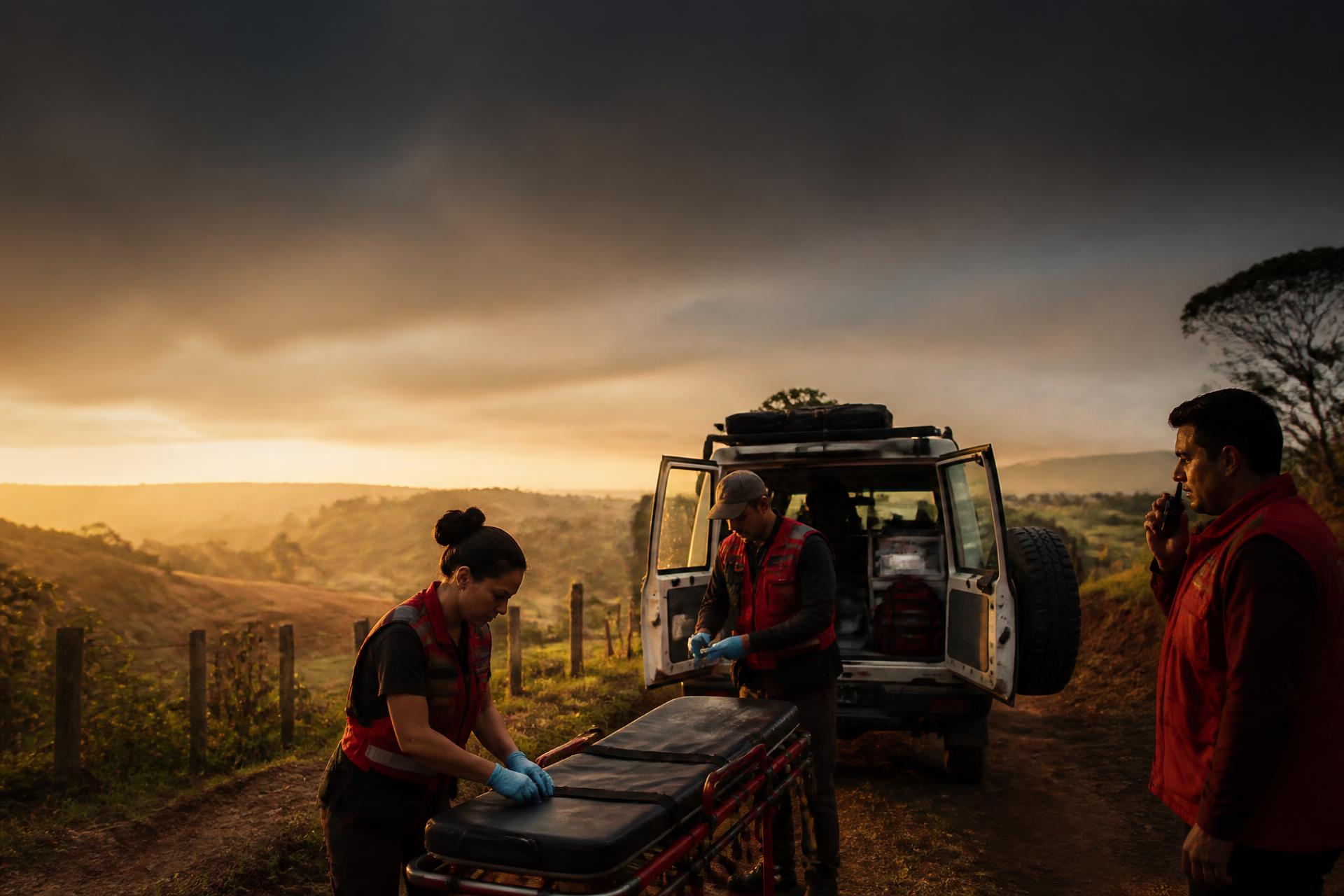
Fear, misinformation, harmful first-aid practices and delayed care-seeking worsen outcomes. Communities and trusted local actors need simple, culturally appropriate, actionable guidance.



A Readiness-Driven Smart Response System for Snakebite
Bite2Care™ is an offline-capable readiness and coordination ecosystem that helps communities, frontline responders, transport and referral teams, and healthcare facilities rehearse, coordinate and measure the critical journey from snakebite to appropriate care — turning established protocols into tested, continuously improving response capability.
The problem
Effective antivenom and clinical management exist. But outcomes depend on far more than treatment availability. People must recognise the emergency, avoid harmful first aid, seek formal care, access transport, reach an appropriate facility and receive timely assessment. Weakness at any transition creates avoidable delay.
Bite2Care™ does not replace snakebite programmes or treatment protocols. It helps the participants across the bite-to-care pathway prepare, coordinate and measure how well the system is likely to function when an emergency actually occurs.
“If a snakebite occurred here today, is the complete response pathway actually ready to work?”
Four connected readiness gaps
Fear, misinformation, harmful first-aid practices and delayed care-seeking worsen outcomes. Communities and trusted local actors need simple, culturally appropriate, actionable guidance.
Responders often lack complete information on where appropriate care is available, and communication between referring and receiving points is inconsistent — causing avoidable transfers and delay.
Capability is not determined by antivenom stock alone. Trained personnel, supportive-care capability, escalation processes, equipment and clinical confidence all contribute to readiness.
Awareness, training, transport, facilities and protocols are usually assessed independently. There is limited ability to test the whole pathway, find weak handoffs and verify that corrective action worked.
The readiness network
Bite2Care™ sits at the centre of the snakebite response — not replacing any role, but connecting them. Each body below receives a different readiness surface, and every interaction feeds shared learning back into the network.
An Infiniqo™ initiative
Aware · Prepare · Respond · Recover
Snakebite experts
Clinical governance — protocols, simulation scenarios and case review that keep every workflow evidence-led.
ASHAs · ANMs · CHWs
Micro-training, guided first-response prompts and readiness drills on the devices they already carry.
Ambulance & referral personnel
Pre-alert, routing and handover checklists so transport time is used, not lost.
PHC / CHC clinicians
Triage and antivenom-readiness workflows, stock visibility and structured escalation support.
District-hospital clinicians
Referral context on arrival, critical-care pathways and tele-support links to specialists.
Community organisations
Awareness campaigns, local risk mapping and sustained community drills that hold between seasons.
Public-health administrators
District readiness dashboards, gap analytics and after-action learning that directs investment.
Snakebite survivors / family
Recovery follow-up, rehabilitation guidance and lived-experience feedback returned into the system.
The APRR methodology
“Do people recognise the risk and know the correct action?”
Aware strengthens multilingual understanding of prevention, safe first response, harmful practices to avoid, and the importance of seeking qualified medical care without unnecessary delay. Delivered through Bite2Care™ Learn and community-facing Situation Rooms.
What we measure
“Are people, facilities and networks ready to act together?”
Prepare moves beyond information delivery to tested capability. Role-specific Bite2Care™ Situation Rooms let community responders, transport personnel and healthcare workers rehearse realistic scenarios, decide under pressure, receive structured feedback and identify readiness gaps before a real emergency occurs.
What we measure
“Do the right actions happen in the right sequence?”
Respond supports the operational journey from bite site to appropriate care. Bite2Care™ Navigate and Hospital Readiness workflows surface verified referral pathways and participating-facility capability, while structured handovers and role-appropriate guidance improve coordination between responders and receiving facilities.
What we measure
“Does every event make the next response stronger?”
Recover extends the model beyond the acute event through rehabilitation awareness, after-action review, incident learning and corrective-action tracking, so that experience strengthens future preparedness rather than being lost with discharge.
What we measure
The Bite-to-Care journey
A snakebite is not a single clinical event — it is a sequence of handoffs across roles, distances and institutions. Bite2Care™ treats the handoff itself as the unit of intervention: not only whether each participant performs correctly, but whether information and responsibility actually move between the community, the responder, the transport team and the receiving facility.
Recognition of the bite and the urgency of formal care.
The victim and bystanders take the first safe actions.
Neighbors, family and local leaders activate support.
ASHA, ANM or CHW reaches the patient and guides next steps.
Correct immobilization and field assessment before movement.
Safe movement to the right facility with pre-alert information.
Triage, registration and rapid handoff from the transport team.
History, examination, severity grading and investigation.
Appropriate antivenom and supportive care under protocol.
Monitoring, complication management and discharge planning.
Physical and psychological recovery after acute care.
Return to family, work and community life.
The case feeds future training, protocols and readiness.
The Bite2Care™ platform
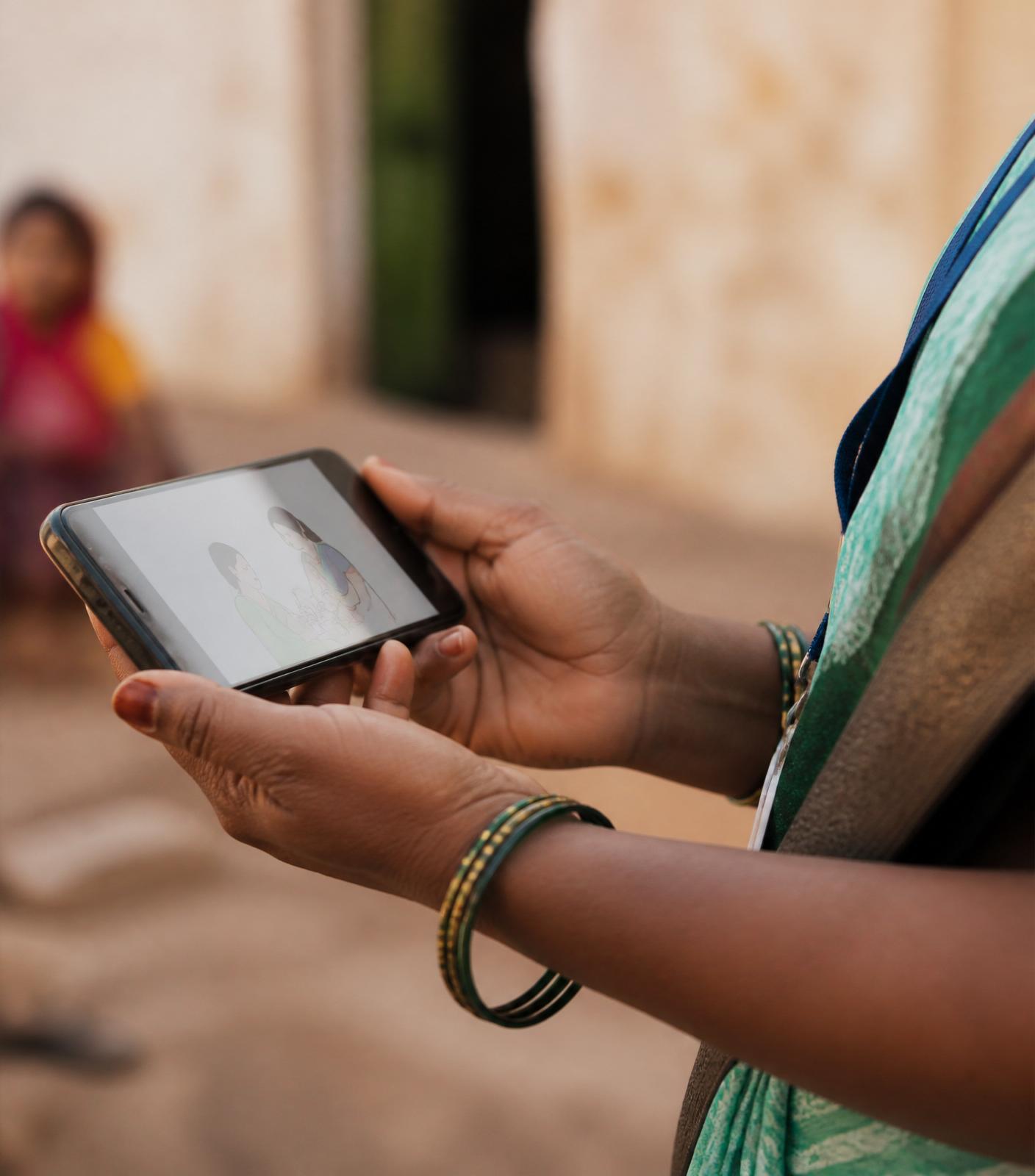
Bite2Care™ is offline-capable and multilingual by design, because continuous connectivity, smartphone ownership and literacy cannot be assumed in high-burden settings. Every clinical-adjacent surface is medically governed, and the platform works through trusted intermediaries such as community health workers rather than assuming direct smartphone use.
Aware · Prepare
Medically governed, role-specific and multilingual education on prevention, safe first response, harmful practices to avoid and prompt care-seeking — available offline.
Prepare
Role-specific scenario rehearsal for community responders, transport personnel and healthcare workers. Decisions are made under pressure and returned with decision-level feedback and after-action review.
Respond
Verified information on referral pathways and participating-facility capability, with a visible last-verified timestamp — supporting, never overriding, existing referral processes.
Prepare · Respond
Facility-readiness assessment beyond antivenom stock — recognition and escalation, supportive care, communication and referral — with corrective-action tracking and reassessment.
Cross-cutting
A bounded assistive layer that organises and surfaces approved information within clearly defined clinical-safety limits, with source-governed content and human oversight.
Bite2Care™ Readiness Index
The proposed Bite2Care™ Readiness Index (BCRI) measures readiness across nine dimensions spanning the complete pathway — from prevention and first response through clinical care to recovery and system resilience — making gaps visible and tracking whether corrective action actually closed them.
The nine domains are provisional; their weights will be set through field testing and expert review.
An honest caveat. During early development the BCRI is treated as an operational readiness measure — not as a validated predictor of mortality.
Exposure prevention, recognition, correct first aid, rapid care-seeking and local trust.
Try it — sample Readiness Wheel
Illustrative demo — drag the sliders to model a district profile. Weights are provisional and will be set through field testing and expert review.
SAMPLE COMPOSITE
45.2
out of 100
Explicit boundaries
Its role is to make the response pathway more visible, testable, coordinated and continuously improvable — a readiness and coordination layer around national programmes, clinical guidelines, ambulance services and antivenom systems, never a replacement for them.
Who we serve
Bite2Care™ is a multi-user ecosystem, but its primary operational users are the frontline actors responsible for the first critical handoffs between a snakebite and appropriate medical care: community and frontline health workers, referral and transport personnel, and teams at first-receiving facilities. People affected by snakebite and their families are the primary beneficiaries — and are also users of the community-facing awareness and preparedness components.
Where we are
The end-to-end readiness model, APRR methodology, stakeholder journeys, initial product architecture, safety boundaries and India-first implementation approach are defined. The next stage is to validate these assumptions with end users and convert the concept into a functioning prototype.
Funding would support
January – October 2027
Confirm 1 pilot geography and 2–3 anchor clinical/community partners; establish governance, map the bite-to-care pathway, finalize study protocols and data-governance requirements, and submit applicable IEC/IRB approvals.
Conduct 30–40 frontline/community interviews, 5–8 clinician/facility interviews, and 6–8 co-design workshops with ASHAs/ANMs, CHOs, transport personnel, survivors and community actors; establish baseline readiness measures.
Finalize role-specific workflows, offline-first architecture, clinical-safety boundaries, structured pre-arrival handoffs, BCRI v1, and 4–6 clinically governed Situation Room scenarios.
Develop initial Learn, Situation Room, facility-readiness, referral/handoff and BCRI capabilities; implement multilingual and offline synchronization functionality; deliver Alpha Release 1.
Conduct expert clinical review and 3 usability-testing rounds with representative frontline users across at least 5 facilities; target ≥80% completion of core workflows and refine scenarios and BCRI indicators.
Test with 15–20 frontline workers, 5–10 transport/referral personnel, and 10–12 clinicians; measure decision performance, usability and ≥90% structured-handoff completeness; conduct After-Action Reviews.
Run end-to-end exercises across 5–8 facilities; validate data ownership, referral workflows and ≥90% successful offline-to-online synchronization within the defined sync window.
Resolve or formally risk-accept 100% of Critical/High safety findings, release Prototype Iteration 2, and repeat targeted scenarios.
Conduct 3-5 multidisciplinary exercises with 50+ participants, testing the complete bite-to-care pathway and BCRI performance.
Finalize the prototype, refined BCRI, clinical-safety dossier, district implementation/cost model, sustainability plan, partner roadmap and final evidence package.
By November 2027
A functioning prototype whose principal workflows have been tested with representative end users through controlled and near-real-world exercises — with documented usability evidence, clinically reviewed scenario content, an initial BCRI framework, validated safety and governance processes, and an evidence-informed plan for real-world pilot testing in a high-burden setting.
Safety, ethics & governance
Bite2Care™ operates across community, referral and clinical environments. Clinical governance, conservative system boundaries, transparent information provenance, data protection and end-user co-design are treated as design requirements — not as later additions.
Clinical-adjacent content and scenarios undergo expert review and align to applicable treatment guidance. Where AI is used, it is constrained to approved use cases with source-governed content and human oversight.
Participating facilities and health-system partners define how capability and antivenom information is verified. Information carries a visible last-verified timestamp and is never presented as live without a dependable source.
Bite2Care™ supports rather than autonomously controls referral decisions. Existing emergency, referral and clinical authority always takes precedence.
Offline-capable, multilingual and simplified interfaces, delivered through trusted intermediaries — because connectivity, device access and literacy cannot be assumed.
Only data necessary for the defined purpose is collected, with role-based access, de-identification where appropriate, and separation of operational from research data.
Additional safeguards for minors and vulnerable participants, and community co-design with survivors, frontline workers and trusted local actors so engagement is respectful and locally appropriate.
Governing principles
It must be sustained, refreshed, and measured — not delivered once and forgotten.
It is capability tested. Simulation, scorecards, and corrective action close the loop.
It begins with the person bitten and every hand the patient passes through.
It includes rehabilitation, livelihoods, and system learning that feeds the next cycle.
Partner with Infiniqo™
Bite2Care™ is designed to become an institutionally owned readiness capability — not a grant-dependent standalone application. We are seeking clinical, implementation, evaluation and funding partners for the India-first validation phase.
Prize, grant and catalytic funding for prototype development, field validation and evidence generation.
Procurement of readiness services, integration with existing snakebite programmes, ASHA/ANM and PHC/CHC workforce coverage.
Local co-design, trusted community engagement, language localisation and field testing in high-burden geographies.
Clinical governance of content and scenarios, readiness-measure validation, implementation evaluation and publication.